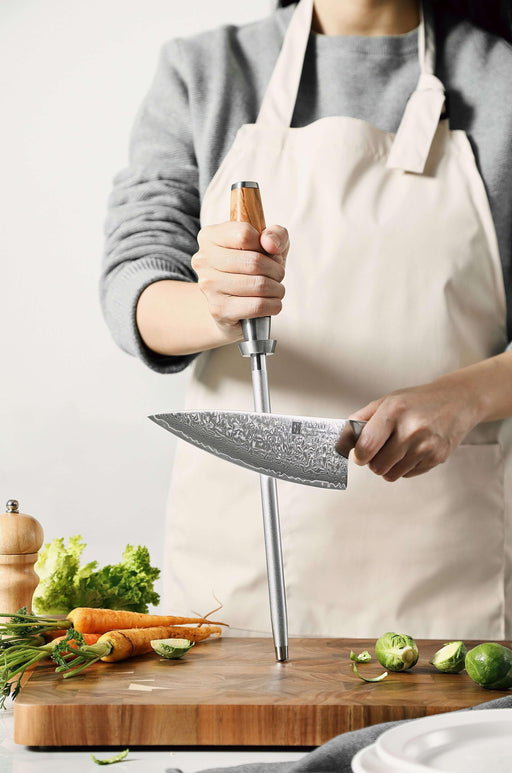
In the culinary world, maintaining the sharpness of kitchen knives is crucial for both efficiency and safety. A hone rod, often referred to as a honing steel, is an essential tool for this purpose. It not only helps in retaining the sharp edge of knives but also ensures precise cutting. Choosing the right hone rod can be a daunting task given the myriad of options available. This article will guide you through the important factors to consider when selecting the best knife hone rod for your kitchen, ensuring your culinary tools remain in optimal condition.
Understanding the Basics of a Hone Rod
Before delving into the selection process, it is essential to comprehend what a hone rod is and its primary function in the kitchen.
- Purpose: A hone rod is primarily used to realign the edge of a knife. Contrary to popular belief, it doesn’t sharpen the knife but rather maintains its edge.
- Material: Hone rods are typically made from steel, ceramic, or diamond-coated surfaces. Each material offers different benefits and longevity.
- Design: The design usually consists of a long rod with a handle, allowing for easy and safe use.
Choosing the Right Material
The material of the hone rod plays a significant role in its effectiveness and suitability for different types of knives. Here are the common materials used:
Steel Hone Rods
Steel hone rods are the most traditional and widely used type. They are suitable for most kitchen knives and offer durability. However, they require regular maintenance to prevent rust. Discover expert strategies here for maintaining steel hone rods.
Ceramic Hone Rods
Ceramic rods are harder than steel, making them effective at maintaining a knife’s edge. They are ideal for softer metals but can be fragile and prone to breaking if dropped. Learn about our tailored solutions to protect and care for ceramic hone rods.
Diamond-Coated Hone Rods
These rods are coated with diamond dust, providing a very hard surface. They are suitable for all types of knives and can even sharpen slightly, in addition to honing. They are generally more expensive but offer superior performance. Explore advanced guides and tips on using diamond-coated hone rods efficiently.
Factors to Consider When Choosing a Hone Rod
When selecting a hone rod, consider the following factors to ensure you get the best tool for your kitchen:
- Knife Type: Different knives may require different hone rods based on their material and edge requirements.
- Length of the Rod: Ensure the hone rod is long enough to accommodate the length of your largest knife comfortably.
- Grip and Safety: Look for a hone rod with a comfortable grip and non-slip handle for safe use.
- Ease of Maintenance: Some materials, like steel, may require more maintenance to prevent rust. Consider how much upkeep you are willing to perform.
Conclusion
Choosing the best knife hone rod involves understanding the different materials available, assessing the specific needs of your kitchen knives, and considering practical factors like length and grip. By selecting the right hone rod, you can ensure your knives remain sharp and effective for all your culinary endeavors. For more detailed information on selecting the right hone rod, find out more about this approach.